
The Private Side of Friendship
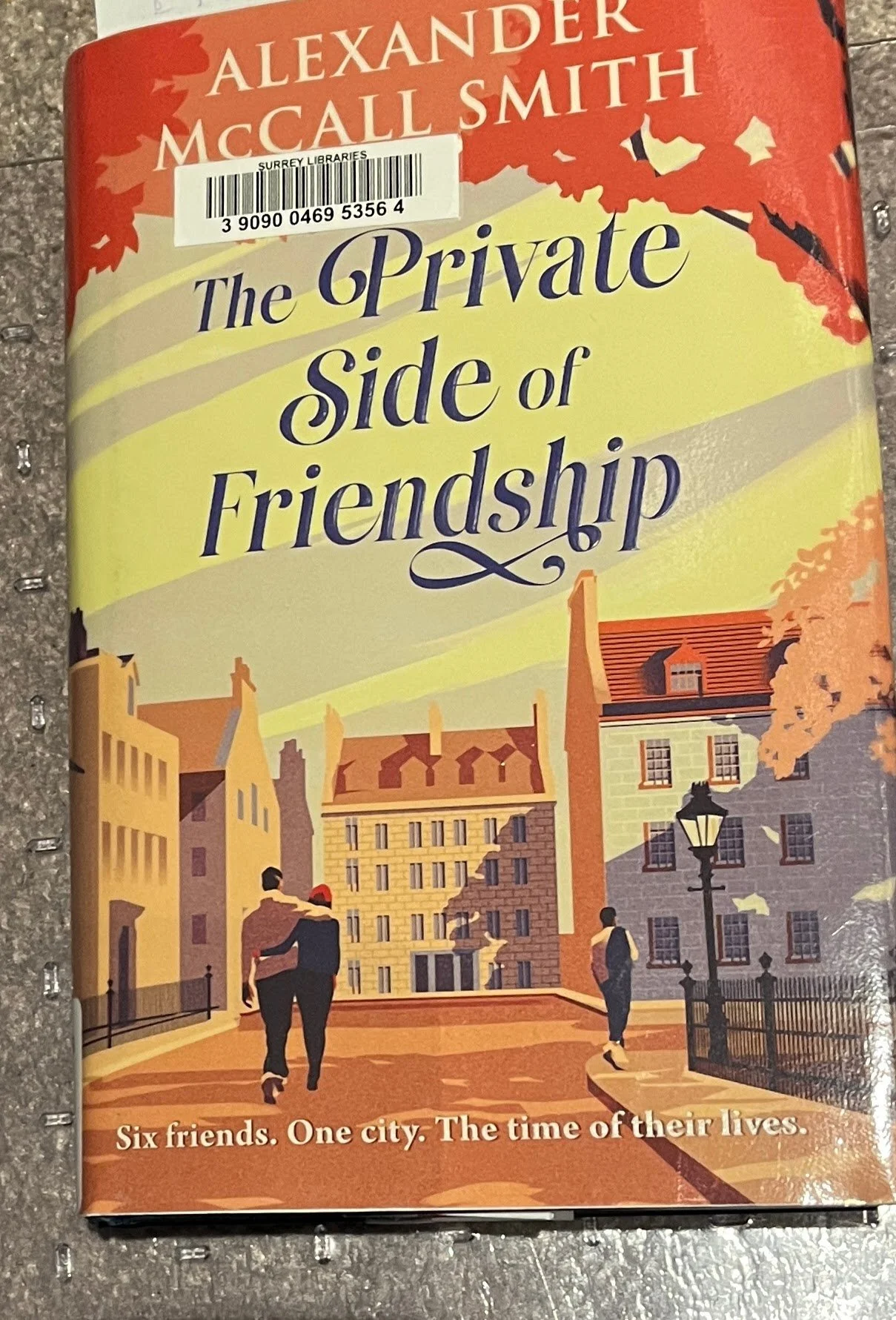
The daylight Edinburgh so delightfully portrayed by Alexander McCall Smith in this story of friendship among student flat mates could hardly be more different from the dingy gang-ridden nighttime underbelly seen through the eyes of Ian Rankin’s pessimistic detective John Rebus. Yet the themes raised in the two novels have more in common than a first glance suggests. In their different ways, and on different scales, both novels raise questions about morality.
This story is set in Edinburgh in 1984, when the bitter miner’s strike shook the United Kingdom. Julie, a student of art history, takes a lease on a large flat, where she is joined by two other girls and three boys—and yes, girls and boys are the words they use to refer to themselves and each other.
One of the joys of youthful friendships is deep conversation, and we listen in as the students, of varying backgrounds and varying views, talk about the plight of the miners.
In a speech to the strikers, union leader addresses them as comrades, saying “The market never created wealth. The market never built machinery. The market never sat by the hospital bed of a sick bairn. Those things are done by folk like those who live in this town, by folk who do not make off with the profits of the labour of others. The market doesn’t care about the people who make up our working communities. The market considers us disposable…”
The flat mates listening to this speech assess its claims differently. Yet as behooves students and indeed anyone in a similar position, they manage to have a civil conversation about the issues while maintaining emotional consideration for the people who hold different views.
Also fair game for conversation is “the impunity that class gives you in this country,” which leads to a conversation about Anthony Blunt, who happens to be a distant cousin of one of the flat mates. This leads to interesting questions of moral proximity and moral responsibility: how heavily should loyalty weigh in the decision of whether or not to turn such a person in if you knew he’d done wrong?
Their talk about fox hunting and sparrow shooting as sport makes Georgia reflect on “the braying mob” that was “often how humanity bonded.” The problem certainly hasn’t gone away; indeed, we are faced daily with the currently contaminated state of the internet by anti-social media.
Discussions of the social contract raise such issues as the difference between the things we want for themselves and those we desire in order to achieve some other goal. To avoid disappointing loves ones or more general social disapprobation, we may do things we don’t really want to, for instance, visiting a tedious relative who is sick because we are expected to do so.
The person in a moral dilemma may feel conflicting wants. For instance, a kamikaze pilot may not want to end his life, even while he wants to do his duty and hit the target.
When Julie signs the lease to the flat, she agrees, both verbally and in writing, that it will not be occupied by more than six people. What is the right thing to do when she becomes convinced that someone else is breaking this rule behind her back?
Talking to the landlady, James, a philosophy student, is told that “Our shared cultural references may not quite have disappeared, but they’re certainly on the endangered list.” What effect, they wonder, will that have on the social contract and the cohesion of society?
This novel also raises the interesting question of the value of art. Unsurprisingly, the poetry of Auden comes up, in this case, a poem inspired by a picture. Julie’s lecturer quotes Auden’s poem inspired by the painting he has shown them. Pieter Breueghel has painted an ordinary scene that includes people ploughing, fishing and trading. In the midst of it all, he has shown with the leg of the fallen Icarus extending from the sea. These words express Auden’s reaction:
About suffering, they were never wrong.
The old Masters, how well they understood
It’s human position..
The professor explains. “Suffering, Auden says, takes place when people are leading their ordinary daily lives, getting on with their business. So in this picture, the ploughman may have heard the boy’s cry as he fell from the sky, but for him, like for the people on the ship, there is “somewhere to get to.” They carry on.
I particularly enjoy this author’s gently humorous but incisive comments on the moments we are living through. When Julie catches herself mentally generalizing about Glaswegians, “who could sound as if they were about to start a fight or proposition you.,” she grins to herself “at the impermissible thought; she knew she should not even think such a thing.”
On a more serious note, one of the students suffers a crisis of confidence where he feels “at odds with the world” and has to pretend to accept “the whole edifice of expectations and beliefs” by which most people live.” Another student helps in an unconventional way.
More serious still is the consideration of our violent human history. Julie is aware that Scotland’s bloody history, with its “scheming and warring nobles and wild, unruly Highland clans…has been swept away by the passage of centuries.” Yet she feels the violence has “not been entirely eradicated,” but remains behind “like a recalcitrant stain.” Reflecting on the progress of the bitter strike, she feels the “curious banality” of suffering, which persists, “surviving all our attempts to put it in the past.” Closer than we imagine, it backdrops our “innocent activities, our lack of attention. Nobody would notice Icarus falling, even today….”
This is a delightful book about the moral questions we constantly face — or try to avoid, as seen through the eyes of intense youthful friendships. Though by their nature such intense friendships are transitory, they are “like little love affairs, only completely innocent.” We can neither retain nor relive this special season of our lives; neither do we ever forget it.