
The Versions of Us by Laura Barnett
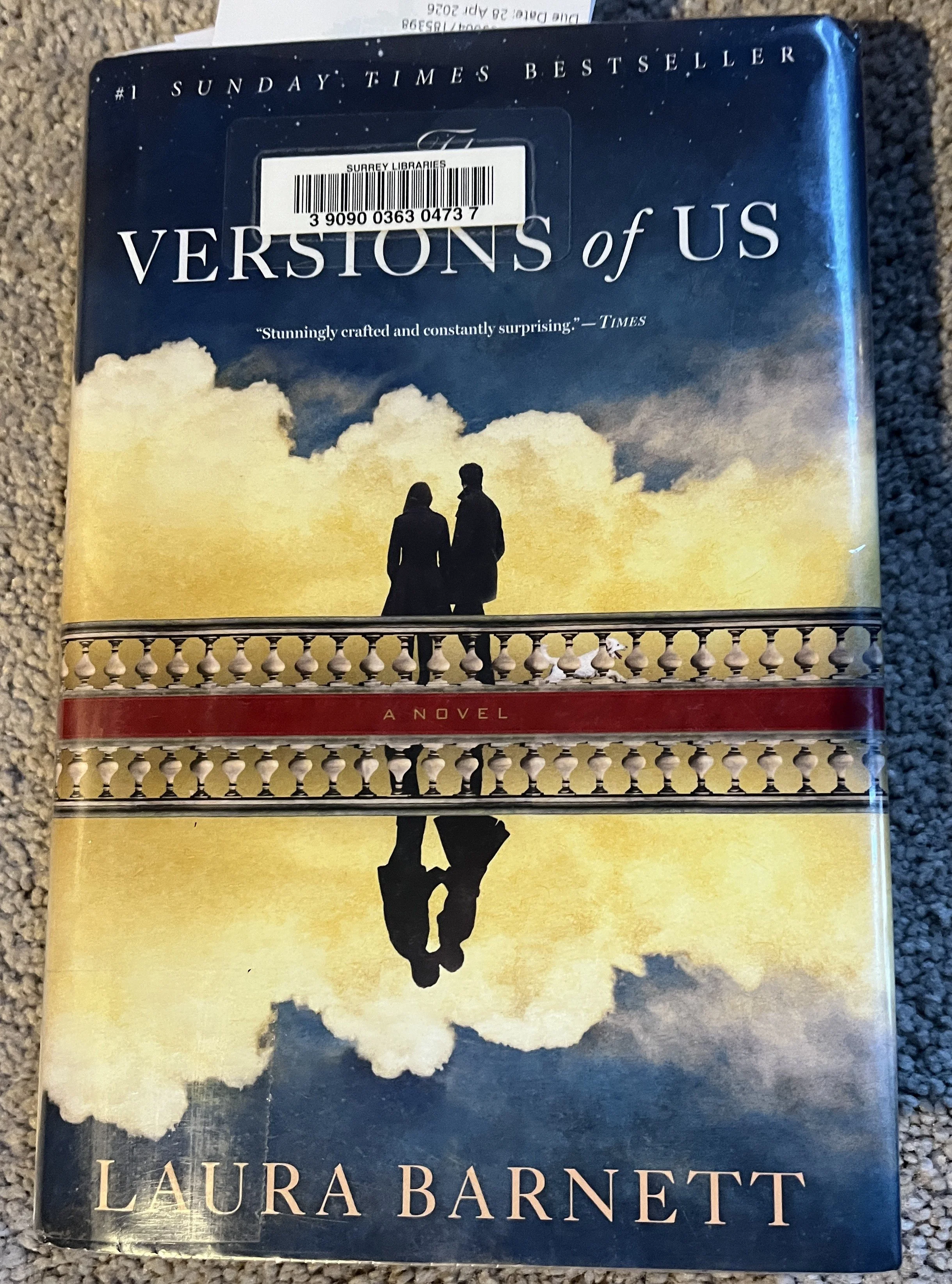
When I picked up Laura Barnett’s wonderful novel, I’d just put down a newly published and very different book. Disappointed in the unrelatable characters, I’d torn through it anyway, partly out of long habit and partly hoping to learn how the potentially interesting plot was resolved. Sadly, it wasn’t. Knowing how widely reading tastes vary, I’ll keep the title to myself. I mention it here only because Versions of Us was the perfect antidote .
An altogether quieter read, Barnett’s novel portrays human challenges we all face involving love, loyalty, and our tendency to wonder about roads not taken. What work should we pursue? How do we choose and close friends and partners?
Filled with inner drives and ambitions, we must all face questions about how much of ourselves to sacrifice for the sake of our financial security, partners and children. How can we find courage to let go when we discover later that choices long past return to haunt us in retrospect as terrible mistakes. What, if anything, can we do to compensate for these old errors?
The Versions of Us brings these questions to life through a cast of characters who take different paths in different versions. Three alternative tellings delve beyond issues of pleasure, satisfaction and creativity. Characters must cope with addictive tendencies, inherited historic traumas and family dysfunction, as well as society’s differing but deeply ingrained expectations of men and women. Barnett’s interwoven tales reveal the choices her characters make when the road forks and they must go one way or the other, and how their’ lives are changed as a result.
Here are a few of the passages I found deeply resonant.
When her first love realizes that Eva is descended from European Jews, he wonders whether their wedding should include Jewish rituals. She assures him that her parents are “above all that,” having seen at first hand where tribalism can lead.
At her brother Anton’s funeral, “she still sees the small, determined child”...But of course that boy is gone, as are the earlier versions of herself.” One of these is “the young student falling from her bicycle, sensing the shadow of a man pass over her” before Jim, then a stranger, stops to offer help.
Awaiting the birth of his son, Jim reflects on what he’s heard about the strangeness of newborns. Though “they seem like shrunken old men and women,” they still “carry the inchoate knowledge of what comes before.”
After Jim does something he later feels guilty about, he notices how guilt fades over time. Eventually it becomes “something like tinnitus: a low-level white noise, always present, but livable with. Not life-threatening.”
As a mature man, he experiences a moment of “disorienting happiness,” and savours it, “old enough now to know happiness for what it is: brief and fleeting, not a state to strive for, to seek to live in, but to catch when it comes, and to hold onto for as long as you can.”
A snippet that had a particularly personal resonance for me describes how after Anton’s death, Eva and her sister-in-law find “their long-established affection deepening into something wordless, the terrible of intimacy of grief.” This returned me to a moment outside the Cariboo Hospital in Quesnel, where I walked with my sister-in-law on a winter day, silent in the shared knowledge that my brother, her husband, would die within days.
A part of me wryly identified with Jim’s awareness, even as his son sets him up with a Facebook account, that “the larger part of him can’t understand how and when the world decided to knock down the walls that had once discreetly shielded private lives from view.”
The depth of Laura Barnett’s novel impressed me deeply. Written in memory of her grandmother, it is a delightful homage.