
Brotherless Night by VV Ganeshananthan
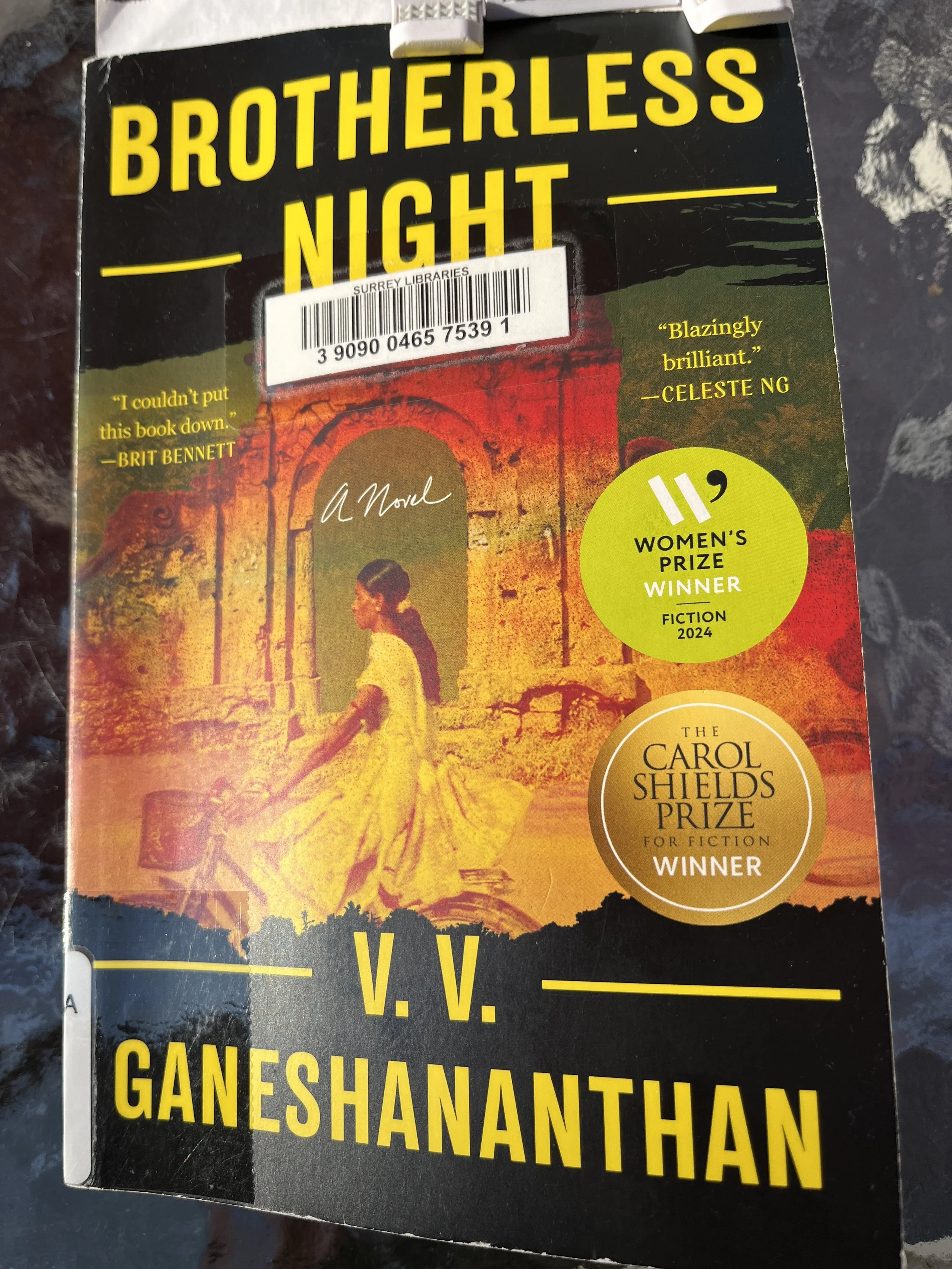
This meticulously researched novel portrays the Sri Lankan civil war through the eyes of Sashi, a medical student in Jaffna. In Tamil culture, family loyalty is valued, yet her family is torn apart “like an old newspaper,” beginning with the death of her eldest brother, a doctor, in in a senseless attack.
This powerful and poignant story portrays the cycle of violence that follows repressive regimes and the “liberation movements” they inspire. Tired of Increasingly violent oppression of the minority Tamils by their own government, many “boys slipped out of their beds or classrooms, turned their faces from their mothers, fathers, sisters and teachers,…walked to the sea…crossed the water quietly, in small boats guided by their elder brothers, teachers and schoolmates” and crossed the narrow strait to Tamil Nadu in India, “which trained them, gave them guns, and sent them back to wage war.”
Eelam, the proposed independent state for Tamils. held “the promise of freedom, however imperfect. The militants said homeland, and fortified by generations of inherited anger and our own new riot-fueled rage, we listened.” Sashi’s community is soon suffering “an epidemic of disappearing boys.”
The consequences of civil war are drastic. “It took the government and the Tigers to make our lives so small. I remember how my three remaining brothers, who loved music and art and libraries and school, became quieter as the call of militancy grew louder. Their jokes dried up, as though politics had sapped all their humour.”
Predictably, the liberation groups — LTTE, EROS, PLOTE, EPRLF, TELO — multiply and turn against one another. “Each group announced itself with a different set of … ideas about change.” The groups also have different “ways of treating those who were not aligned with them.” The Tigers arbitrarily kill Dalit people because “they won’t observe caste,” thus adding a “religious” element to their violence.
A plan is afoot to bring Sinhalese settlers into Tamil areas. To prepare for this incursion, Tamils are advised to leave their homes and go on holiday. For no logical reason, the government bans cycling, and forbids cars, minibuses, trucks, and motorbikes on the roads.
This tale of civil war reminded me chillingly of the Irish Troubles. The memory of my research into that conflict is fresh, because it backdrops the debut novel I’m currently pitching.
So many commonalities. Like the Loyalist RUC, the Sri Lankan army "kicks down Tamil doors” and detains and holds the men behind them “on suspicion of being militants. “Turn a dead boy into a militant, and his death is excusable…acceptable collateral damage.”
Like the IRA, the Tamil Tigers resort to brazen robbery to fund their movement, and leave “duly” punished “traitors” in the street to intimidate dissenters.
Violent outsiders try to infiltrate a peaceful demonstration. In Ireland, Loyalist thugs disrupt a march asking for equal civil rights for Catholics and Protestants. In Jaffna, militant separatists try to bring their banners into a march organized by and for the mothers of sons taken away by government forces after being told they were reporting voluntarily and only for questioning.
The arrival of the Indian Peace Keeping Force doesn’t help. It belies its name when some of its members assault local women. Tamil families compound the problem by deeming the rape victims “spoiled,” as they subscribe to conventional ideas about virginity and purity.
Asked to be serve as medical attendant to a Tiger friend who goes on a public hunger strike to demand the unhelpful IPKF leave the country, Sashi finds her internal conflict deepening. Already treating Tamil Tiger patients because of her belief that all sick and injured deserve access to doctors and medicine, she must now decide if she is willing to risk her safety to provide medical support to the Tiger friend she’s known all her life.
Employing an unusual fiction technique, Ganeshananthan occasionally has Sashi step out of her story to speak directly to the reader. When the war begins, she says, “You are thinking, as anyone would, as everyone has, at least in passing, about what you would have done. I would never, you might have said to yourself, or perhaps you are sure you would have done exactly the same. There is no way to know, truly, without standing where we did.”.
Later, wearied by the relentless continuation of the war, she raises the rhetorical question: “Have you ever been haunted by propaganda?
This direct addresses build a powerful complicity between the reader and the story.