
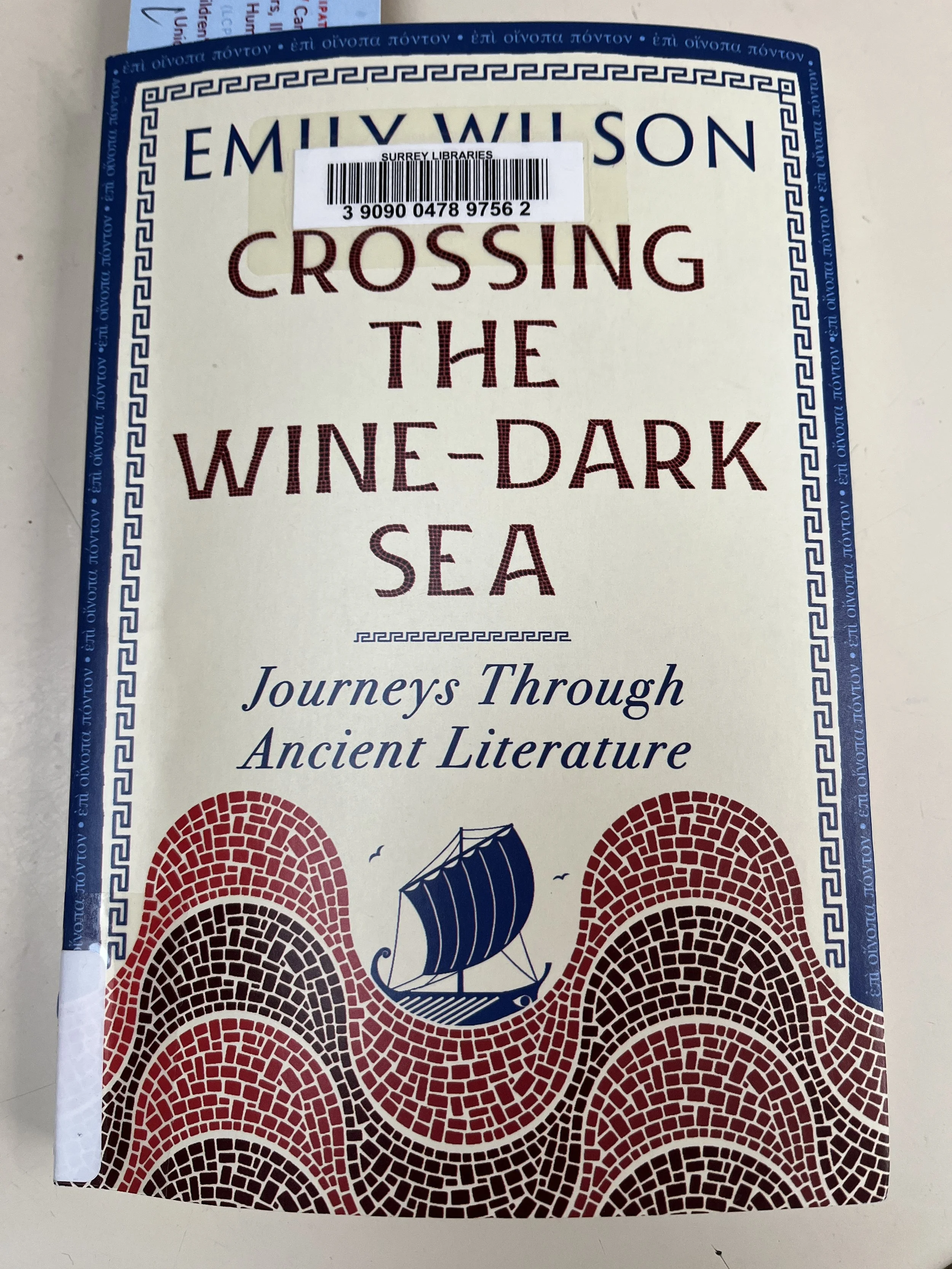
Emily Wilson begins discussing issues of translation by reminding readers that “Language is never a neutral tool by which we represent the world…Form is not entirely distinct from meaning, and aesthetics are always entangled with values.”
Finding comedy “more useful for social history than tragedy,” she uses examples from the works of Aristophanes to dramatize the differing values and sensibilities of ancient Greek audiences and contemporary American ones. The fact that the two cultures define obscenity differently raises the problem of how to handle obscene language.
Wilson also speaks about the conundrum of word choice. Coincidentally, Elif Shafak’s recent Substack post offers some lines from Rilke, who wrote in German. “Love consists of this: two solitudes that meet, protect and greet each other.” Recognizing the quotation, I was convinced that this translation was not the one I was familiar with. Searching online, I found it: “Love consists in this, that two solitudes protect and greet and touch one another.” The use of in rather than at, along with the altered position of that. alters the musicality of the words I remembered from years ago. Ironically, It is unlikely that someone translating those words now would use consist in, because it sounds old-fashioned.
Changing times, Wilson reminds us, bring shifting canons along with differing styles of translation. Another question that must be contemplated is the intended audience. One more challenge is the fact that ancient Greek poetry was meant to be performed and not read.
To illustrate how “all translations are shaped by the interests, training, interpretive frameworks, and perspectives of their creators,” the author refers to a fragment of Sappho, translated by Nobelist Anne Carson, who makes liberal use of solitary square brackets (one per line) to indicate space. She “tries to translate nothing that is not in the Greek, and to follow the original word order and line breaks as much as possible.”
Translation raises other difficult questions. “Can one adequately discuss the later translation and reinvention of an ancient text without being able to read it oneself?” Many have tried, which raises other unsettling questions. We must also ask, “do translators, artists, poets and scholars look back at antiquity as a mirror in which we always find ourselves, or to discover the alien cultural norms of that very different country, the past?”
There is much more to this volume than the subject of translation. In “Slut-shaming Helen of Troy,” Wilson ventures into ancient literary and social tropes. Helen and Achilles, the two characters who make the Trojan War inevitable, represent “destructive female beauty and destructive male strength.” She suggests that at this time in history, “we as a culture are grappling with the questions raised by the myth,” adding that “in the age of internet and AI, we may find new echoes of Helen myth, in its focus on the proliferation of virtual, unreal images that suck people into obsessive desire and conflict…over nothing at all.”
While crediting ancient Greece for its vast contributions to civilization, Wilson debunks the Greek propaganda claims to being such a wonderful democracy. The story of Demosthenes provides a chilling demonstration of how people “often prefer words, images, and big emotions over sober economic truth, even when the ostensibly frail joys of rhetoric result in the loss of substantial benefits, like wealth and freedom.” Now, as then.
One of the most interesting essays raises and attempts to answer the fascinating but rarely asked question of why and how the Romans adopted Greek culture. The final essay is a detailed discussion of how she went about her celebrated translation of The Odyssey (New York: Norton, 2018), followed by a list of twenty self-imposed rules she uses to guide her work.