
Sound Like a Sailor by R. Bruce Macdonald
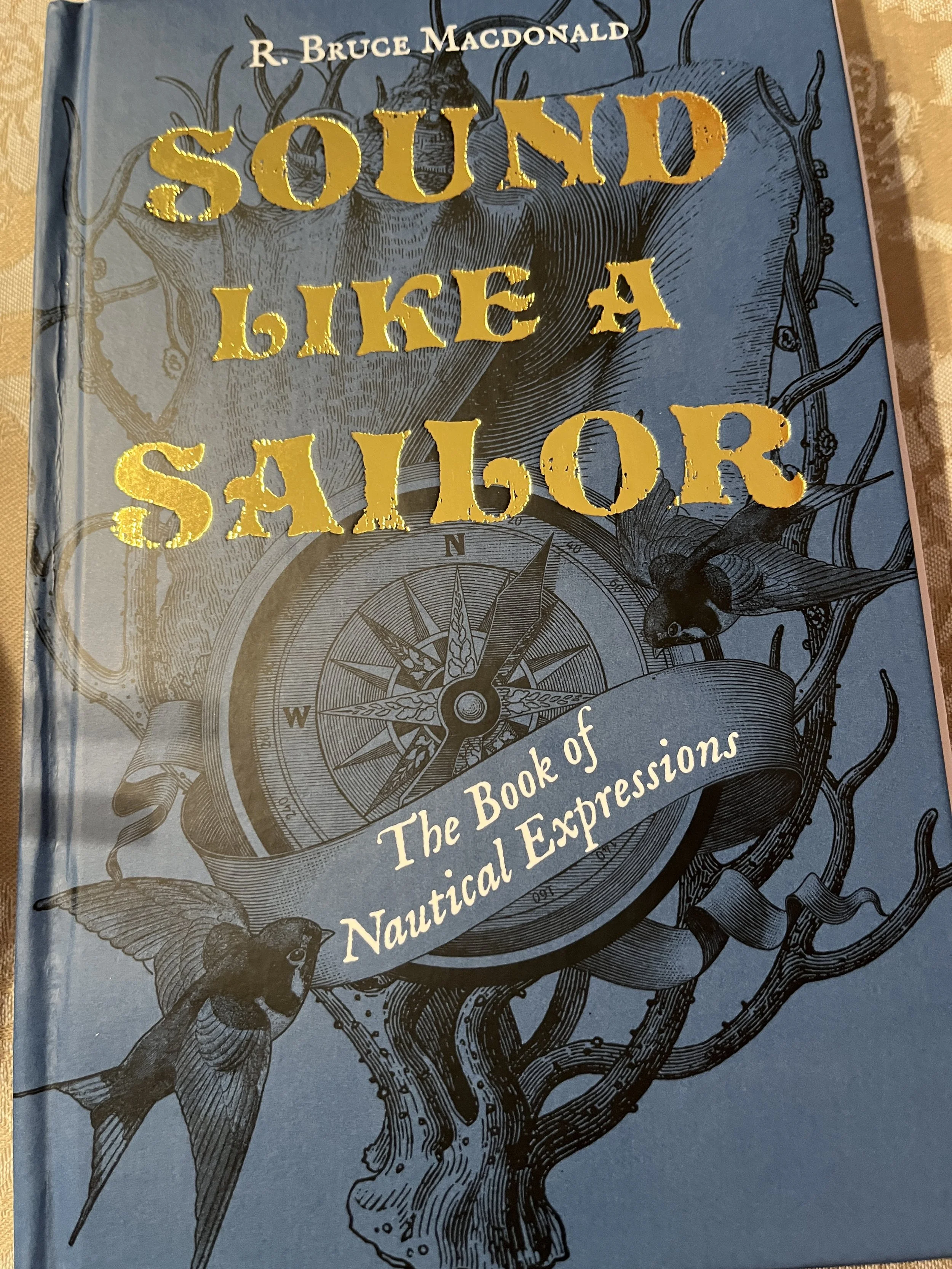
Subtitled The Book of Nautical Expressions, this volume was amusing and enlightening. As well as providing arcane knowledge on the origins of some common expressions, it evoked the voices of my Newfoundland-born mother, and my seagoing dad, who served in the RCNVR during WWII.
Peering through the curtains as the cab drove up, Mom would watch Dad get out after his regular outing at the Legion. “My oh my, Dad’s three sheets to the wind’s eye,” she’d say, clicking her tongue.
Barbaric as it now sounds, “blood money” was once an official term for the cash prize paid by the British Admiralty for each enemy killed in a sea battle. Mom used it differently. Relating the story of their meeting and marriage, she told how how Dad had suggested they marry while he was still on active service. That way, she’d get a naval widow’s pension if he “bought it.” His wife-to-be was having none of it. “I told him I didn’t want blood money.” So they waited till ‘45.
A gimlet is a well-known cocktail. Containing gin and lime cordial, it was named for Royal Navy surgeon Rear Admiral Sir Thomas Gimlette, who added limes to the ship’s supply of gin to combat scurvy. This was also how Englishmen came to be called Limeys.
Having sailors on board ship sleep in hammocks was an innovation made by Christopher Columbus. Observing how the Indigenous people of the Caribbean used these string beds, he saw their value as a way of keeping sailors from being thrown from their bunks in heavy weather.
Ever wonder why beer steins often have glass bottoms? They were designed to foil dishonest recruiters who tricked people into joining the navy. Still used to encourage people to finish and alcoholic drink, “Bottoms up” implied acceptance of “the king’s shilling.” Some recruiters would put a shilling in the beer. When the unsuspecting recruit drained it and touched the shilling to his lips, he was deemed to have accepted payment and joined the navy.
I was surprised to learn how many common words and expressions originated among sailors. Among them are pilot (now associated mainly with airliners), smokescreen, steering wheel, strike, pitch in, happy hour, hijack, landmark, and perhaps less surprisingly, holy mackerel. The meanings have evolved over the years, but the book explains the fascinating origins of these and many other expressions still in daily use.
The equally entertaining companion volume, Never Say P*g, relates a variety of sailing-related superstitions from around the world.